
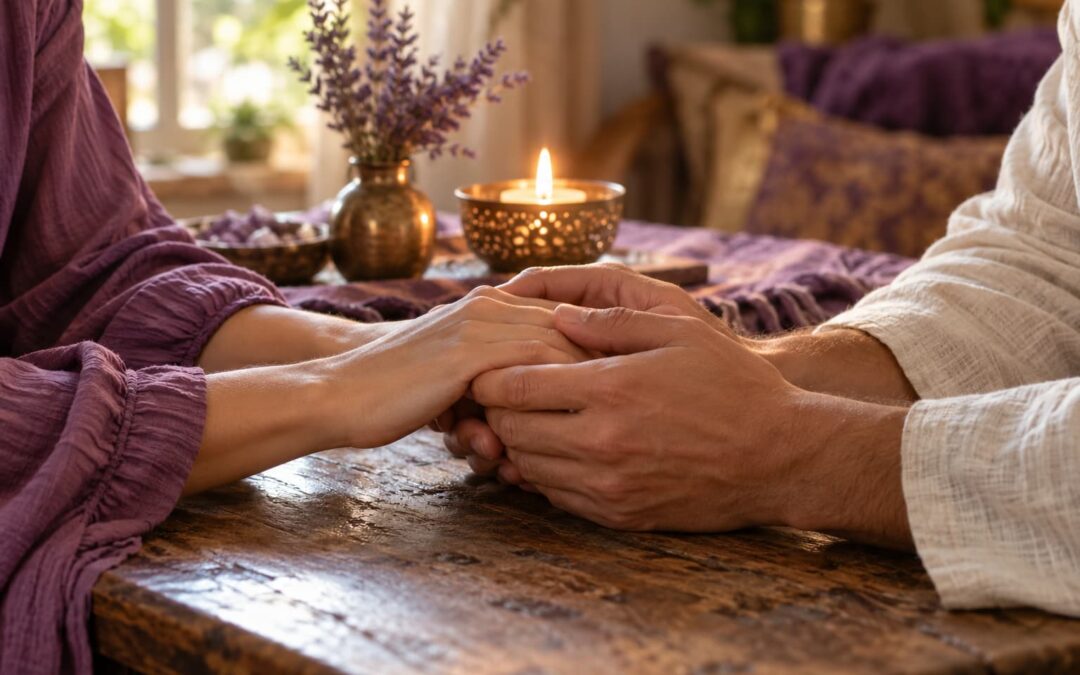
Sexual alchemy and intention
What Is Sex Magick?
Sex magick is a spiritual or ritual practice that combines sexual arousal with a deliberate intention. Practitioners use focused attention, symbolism and sometimes meditation to give sexual experience a personal or spiritual meaning.
The idea behind it is that sexual energy can be directed towards something that matters to you: a personal intention, a sense of connection or a change you want to explore in your life. Within these traditions, sexuality is approached as a possible part of spiritual practice.
You may also come across the phrase sexual alchemy. Here, “alchemy” describes an inner process of change: working with desire, emotion and awareness to understand yourself differently. It’s a symbolic use of the word.
Some people explore these ideas individually; others do so with a consenting adult partner. The beliefs and rituals vary, so there isn’t one method that represents every approach to sex magick. What connects them is the emphasis on intention and the meaning given to the experience.
A useful distinction: practitioners may believe these rituals support manifestation or spiritual change. Those beliefs shouldn’t be presented as proof that sexual energy can make external events happen or guarantee a desired outcome.
Sexuality, Spirituality and History
The connection between sexuality and spirituality has a long history. But it’s easy to blur very different traditions together when looking for the origins of sex magick. Similar symbols or ideas don’t necessarily mean that people were practising the same thing, or seeking the same results.
Rather than treating modern sex magick as one unchanged practice passed down from the ancient world, it helps to look at each tradition in its own setting. Its religious beliefs, purpose and understanding of the body all matter.
Where Tantra Fits In
Tantra is often mentioned in conversations about sacred sexuality. It developed in South Asia within Hindu and Buddhist traditions, and includes a much wider range of teachings than the popular phrase “tantric sex” suggests.
Some Tantric traditions included sexual rites, while others used imagery of divine union in meditation. These practices had religious purposes, including moving beyond ordinary desire or seeking union with the divine. Reducing them to techniques for pleasure misses much of that context.
Tantra and sex magick aren’t interchangeable terms. They may be discussed together in contemporary spiritual writing, but Tantra has its own religious teachings and histories. A modern intimacy exercise described as “tantric” doesn’t automatically represent those traditions.
Reading Historical Claims with Care
Stories about secret sexual rituals in ancient Egypt, India or China can sound compelling. Before accepting them, ask which period, text or tradition is being described. A claim that “ancient people knew this” needs more detail to be useful.
You can explore the personal meaning of sexual alchemy while keeping that curiosity about its history. Understanding where an idea comes from gives you a better basis for deciding what it means to you.
For historical context, see the British Museum’s introduction to Tantra and its explanation of sexual rites in Tantric traditions .
Sexual Energy, Polarity and Connection
In sex magick, “sexual energy” describes the desire, intensity and sense of vitality that practitioners bring into their rituals. Some understand it as a spiritual life force. Others find the phrase useful for describing an experience of their own body, emotions and attention.
The original idea is that this intensity can be given a direction through intention. A practitioner might focus on a personal change, a symbolic image or a feeling they want to explore. Within the practice, that focus gives the experience its ritual meaning.
Understanding Polarity and Duality
Some approaches describe this process through “masculine” and “feminine” energies. These are symbolic categories within those teachings, rather than rules about someone’s sex, gender or role in a relationship.
You might encounter them as a way of talking about complementary qualities: action and receptivity, direction and openness, or giving and receiving. The idea is to explore how different qualities can work together within yourself or in a shared experience.
Within Yourself
Reflection might involve noticing when you want to take action and when you need time to listen, feel or pause. You don’t have to label these qualities masculine or feminine to explore their place in your life.
With a Partner
Shared practice can make room for different needs and ways of expressing affection. Any roles should be freely chosen and flexible, with neither person expected to fit a spiritual stereotype.
The Spiritual Dimension of Sexuality
For people who approach sexuality as sacred, intimacy can carry meaning beyond physical pleasure. It may be experienced as a time of trust, vulnerability, presence or connection with something they consider divine.
Some practitioners describe this as an energetic bond or a merging of spiritual energies. That language expresses their interpretation of the experience; it doesn’t establish that partners create a measurable energy field or gain a power to control outside events.
There’s no requirement to have a dramatic spiritual experience. What feels meaningful to one person may feel ordinary to another. Your own comfort, values and understanding deserve room in the conversation.
Individual Practice and Intention
Sex magick doesn’t always involve a partner. Some practitioners explore it privately, using personal reflection, meditation and sexual experience as parts of a ritual. The emphasis is on the meaning they bring to it.

Masturbation with Purpose
In some forms of individual practice, masturbation is approached with a chosen intention. Practitioners may regard arousal or orgasm as a symbolic moment for focusing on that intention. This reflects a ritual belief rather than an established way to influence events outside yourself.
An intention might concern self-acceptance, creativity or a personal change. Keeping it connected to your own choices can make it easier to reflect on afterwards. What does it mean to you, and how could you express it in everyday life?
An example of a personal intention
“I want to feel more comfortable expressing my needs and make choices that respect them.”
Meditation and Visualisation
Meditation and visualisation also feature in some approaches. A person might contemplate a word, an image or a situation that represents their intention. Within the ritual, these act as reminders of what they want to explore.
The original idea is that focused sexual energy can strengthen manifestation. You can understand that as a spiritual interpretation without assuming that imagining an outcome makes it more likely to happen.
Making Room for Reflection
Afterwards, a few notes in a journal might help you put the experience into words. You could consider what felt meaningful, what felt uncomfortable and whether your intention still fits what you want.
There’s no need to chase a particular sensation or treat orgasm as a measure of spiritual success. You can also explore intention through meditation, writing or quiet reflection without including sexual activity.
Shared Practice and Sacred Sexuality
For consenting adult partners, sacred sexuality can mean bringing deliberate attention to intimacy and the meaning it holds for each person. Some approach this through spiritual beliefs. Others are more interested in presence, affection and honest communication.
In partnered sex magick, practitioners may describe this as an exchange of energy directed towards a shared intention. That is their spiritual interpretation of the experience, rather than evidence that two people can combine their energies to guarantee an external result.

Finding an Intention You Both Share
A shared intention needs to make sense to both people. It might be about expressing affection more openly, listening with greater care or making time for connection. Neither partner should have to adopt beliefs or agree to activities to satisfy the other.
An example of a shared intention
“We want to make more space to listen to each other and say what we need without feeling rushed.”
Presence, Breath and Connection
Contemporary sacred-sexuality practices sometimes include quiet attention, awareness of natural breathing or gentle movement together. These may be described as ways of being more present with a partner. You don’t need to force a rhythm or produce a particular feeling.
Some of these activities are marketed as “tantric”. As the history section explains, that label alone doesn’t tell you how closely they relate to traditional Tantra. It helps to ask what a teacher means by the term and which teachings they draw from.
Letting the Experience Be Your Own
One person might experience a moment as spiritual while the other simply feels close and relaxed. Those responses can exist side by side. A shared practice doesn’t require identical beliefs or matching emotions.
Talk beforehand about what feels welcome, what is off limits and how either person can pause or stop. Consent remains an ongoing choice throughout the experience.
Afterwards, leave room for an ordinary conversation about how it felt. Listening to each other matters more than deciding whether a ritual “worked”, and any intention can be carried into the everyday ways you treat one another.
Sigils, Symbols and Ritual Tools
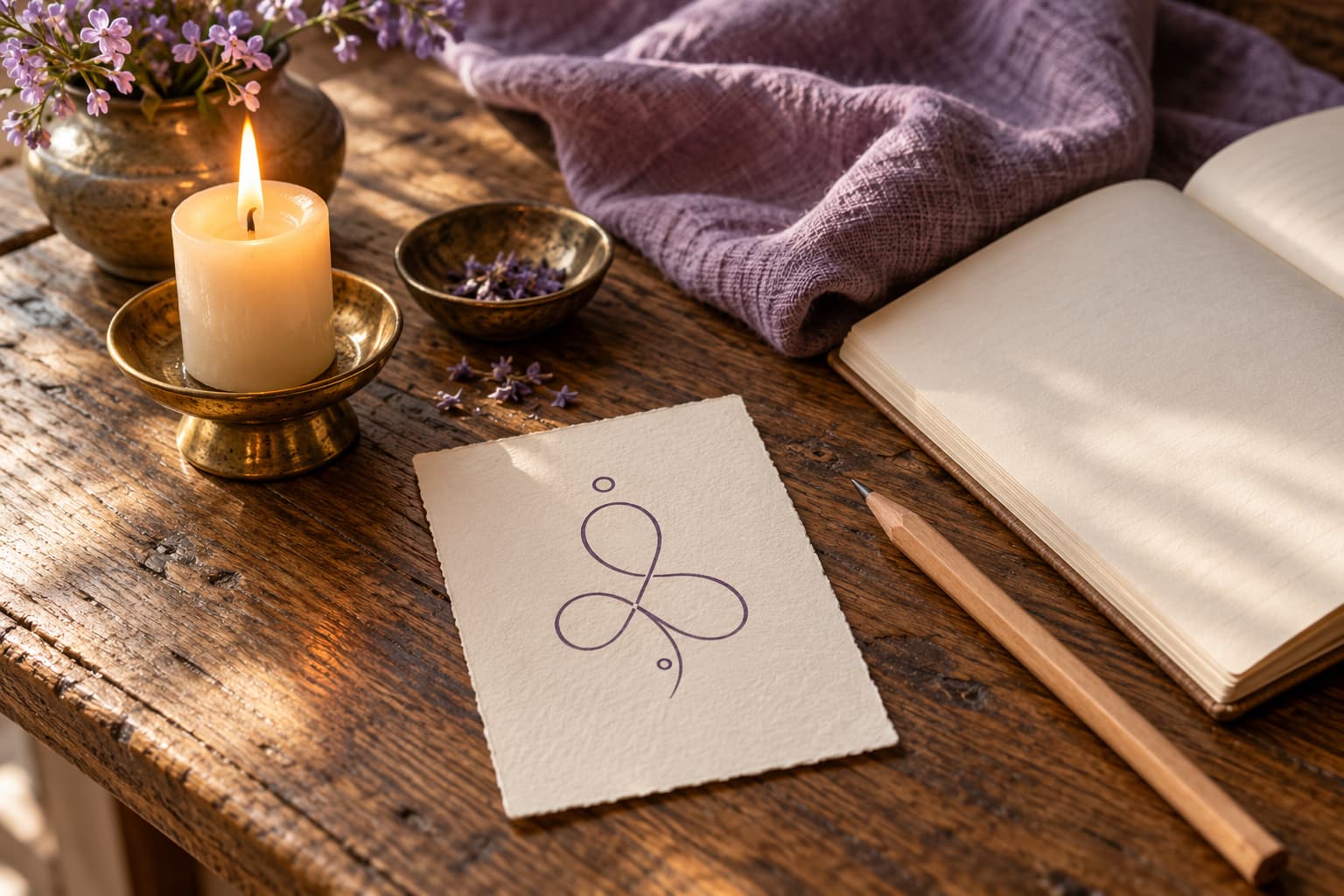
Symbols give an intention a visible form. Within sex magick, practitioners may use a drawing, a meaningful object or a written phrase to represent what their ritual is about. These items can serve as a focus for attention and personal meaning.
What Is a Sigil?
In this context, a sigil is a symbol created or chosen to represent an intention. It might be a simple design whose meaning is known only to the person who made it. Its appearance matters less than the association that person gives it.
Some practitioners describe “charging” a sigil with sexual energy. Within their beliefs, this gives the symbol magical significance or power. That description belongs to the spiritual framework of the practice; it doesn’t demonstrate that a symbol can cause a desired event to happen.
Choosing Something Personally Meaningful
A symbol doesn’t need to be elaborate. For someone reflecting on clearer boundaries, a circle might represent personal space. Someone thinking about a fresh start might choose an opening door. These are possible interpretations, rather than fixed meanings everyone must follow.
The same principle applies to other ritual items. A notebook, a piece of artwork or an object with a personal association might help someone remember their intention. Some practitioners regard such tools as spiritual conduits or amplifiers; others value them for their symbolism.
A useful question: “What does this symbol mean to me, and what choice could I make today that reflects it?” This connects the ritual’s meaning with something you can actually put into practice.
Keeping the Tools in Perspective
There’s no need to buy expensive items or copy a symbol you don’t understand. If you borrow imagery from a religious or cultural tradition, take time to learn its context rather than assuming it means whatever you want it to mean.
Tools are optional. The intention, your understanding of it and the choices you make afterwards can remain the centre of your reflection.
Consent, Boundaries and Discernment
Any exploration of sex magick involving another person needs to begin with freely given, informed consent between adults. Calling something sacred or spiritual doesn’t make consent less necessary, and it doesn’t give anyone authority over another person’s body.
Consent Is an Ongoing Choice
Talk openly about what the practice involves before deciding whether to take part. Each person needs space to ask questions, set limits and say no without pressure. Agreeing to one activity doesn’t mean agreeing to everything that follows.
Anyone can change their mind, pause or stop. A previous agreement, an established relationship or a shared spiritual belief should never be used as a reason to ignore that choice.
You don’t owe anyone sexual participation to prove your trust, devotion or spiritual openness. Your boundaries don’t need a spiritual explanation to deserve respect.
Looking After Physical and Emotional Wellbeing
Practical conversations still matter in a ritual setting. Discuss privacy, sexual health, contraception where relevant and anything either person wants to avoid. Spiritual intentions don’t replace ordinary precautions.
Leave room for feelings that may be unexpected or difficult. Neither person should be expected to continue through discomfort, or to interpret distress as a necessary stage of spiritual growth. You can step back without having to defend your decision.
Choosing Teachers and Practitioners Carefully
If you explore this subject through a book, course or teacher, look beyond confident language and promises of special knowledge. Ask what is being taught, where the ideas come from and what participation actually involves.
Pay particular attention to anyone who:
- Claims sexual access to you is necessary for healing, initiation or spiritual progress.
- Treats questions or refusal as evidence that you are blocked, unenlightened or insufficiently committed.
- Introduces intimate activities that weren’t clearly explained and agreed to beforehand.
- Uses secrecy, status or promises of guaranteed results to discourage you from seeking another perspective.
A respectful teacher can explain their approach and accept your limits. You should be able to leave, decline an activity or take time to think without being shamed.
The same care applies to spiritual intentions themselves. Reflecting on your own choices is different from trying to control someone else’s feelings or decisions. Mutual respect belongs at the centre of the practice.
Questions for Personal Reflection
Sex magick brings together ideas about sexuality, intention and spiritual meaning. Some may resonate with you; others may leave you unconvinced. You can take time to consider both responses without committing to a practice.
The questions below build on the themes explored in this article. Choose one that interests you, write about it or use it to begin a conversation with a consenting adult partner. There’s no right answer to work towards.
- If you brought more intention into your personal or spiritual life, what would you want to explore? What everyday action could support that intention?
- How do qualities such as action, receptivity, giving and receiving show up in your life? Does describing them as masculine and feminine help you understand them, or would different language feel more natural?
- If you wanted to explore sacred sexuality with a partner, how would you discuss your interests, boundaries and beliefs? What would help both of you feel free to agree or decline?
- Is there a symbol, phrase or personal object that represents something you want to change? What gives it meaning for you, and how could you carry that meaning into your choices?
- What do you notice when you use meditation or visualisation to reflect on an intention? How might you distinguish a meaningful inner experience from an assumption about what will happen outside yourself?
You can value a ritual for the reflection or connection it offers while still questioning its claims. Let curiosity, consent and respect for your own limits guide what you choose to explore.
Further Reading
Fancy reading a little more? Choose a topic below to find more articles, reflections and ideas from the blog.
Explore a Private Session with Daniela
If you'd like to explore your own questions or spiritual interests, Daniela offers private online sessions. Take a look below and see what feels right for you.

Psychic Readings
Talk through the questions on your mind, reflect on recurring patterns and explore possibilities with Daniela's intuitive guidance.
View Session Details
Mediumship Readings
A compassionate space to explore spiritual connection and messages Daniela may receive from loved ones who have passed.
View Session Details
Chakra Cleansing
Make time for a spiritual energy session focused on the chakras, personal reflection and a sense of balance.
View Session DetailsPrivate online sessions with Daniela DeCastro. Spiritual experiences are personal, and individual experiences vary.