

Connecting with Your Spirit Guides
If you’re wondering how to connect with your spirit guides, my starting point is simple: make room to pause, settle your thoughts, and listen. In my experience, this connection develops through stillness, clear intentions, gratitude, and a willingness to notice what comes into your awareness.
People come to this practice for different reasons. You might be looking for spiritual guidance, hoping to feel more connected, or simply curious about an experience you haven’t quite understood. I believe that connecting with our guides is something we can all explore, and that it can feel more natural than we initially expect.
My belief is that our guides are already with us. The practices I share here are ways of becoming more attentive to the messages and gentle nudges that I associate with their presence. That doesn’t mean forcing an experience or expecting a dramatic sign every time you sit down to meditate.
Like any meaningful relationship, this has involved time, trust, openness, and vulnerability for me. I’ll share some of my own experiences alongside practical exercises you can try at your own pace, including meditation, intention setting, journaling, visualization, and creating a personal ritual.
Keep your discernment with you. You can explore a spiritual interpretation without treating every thought, dream, or coincidence as a message. Give yourself space to reflect, consider everyday explanations, and make your own choices.
Daniela’s Experiences with Her Guides
I had experiences that I now associate with my guides long before I understood them that way. Some were brief and unexpected. Others stayed with me because of how vividly I remember them and how they made me feel.
An Unexpected Answer in Middle School
I remember walking down the hallway in middle school when a question randomly came into my head: “How will I know my husband when I meet him?”
Immediately, I received the simple response, “He will be left-handed.” At the time, that was enough of an answer for me. Looking back, I consider it one of those early moments of guidance that happened before I was fully aware of what I was experiencing.
The Morning I Became Aware of Their Presence
The first time I became fully aware of what I believed was my guides’ presence in my room, I was frightened. It was around 5 AM, before sunrise, and I was doing my usual meditation, surrounded by a circle of crystals and a white candle.
I had been feeling relaxed and comfortable. Then, suddenly, I felt that I wasn’t alone. I froze like a deer in headlights.
I still remember where I sensed the group standing: in front of the sliding door that led out to the lanai. I couldn’t see them with my physical eyes. I felt their presence, although the impression of where they stood remains clear in my memory. I interpret that as an experience through my third eye.
I sat silently for several minutes. I don’t know exactly how long. Then I experienced what felt like a calm voice communicating internally, rather than a sound coming from somewhere in the room. I understood it as telepathic communication.
Pausing to Notice How I Actually Felt
The first question was whether I felt threatened. I checked in with myself and realized that I didn’t.
Then came a series of questions about sensations I had previously associated with earth-bound spirits. Did I have cold chills or goosebumps? Was the hair on the back of my neck standing up? Had the room become cold? Each time, I paused, considered the question, and answered no.
The questions felt calm, soothing, and matter-of-fact. Finally, I was asked how I did feel. When I stopped reacting to the surprise of the experience and paid attention, I realized I felt calm, safe, and surrounded by a loving warmth—like a big hug.
“When it’s us, that is how you will feel. We will always feel loving, and you can feel that energy with your heart.”
That is the message I remember receiving. It became an important part of how I understood my relationship with my guides.
Keeping Discernment Part of the Practice
I compare discernment to answering your front door. Before inviting someone into your home, you want to know who is there. In a spiritual practice, I believe it’s equally reasonable to pause, ask questions, and pay attention to your own boundaries.
For me, the experience I associate with my guides felt warm, loving, and supportive once my initial surprise settled. That is my personal experience, rather than a test that can establish the source of someone else’s feelings or impressions.
You set the pace. If a practice leaves you uncomfortable, you can stop, open your eyes, and return your attention to your surroundings. You don’t need to push through fear or accept an impression as guidance simply because it arose during meditation.
Embrace Stillness and Silence
For me, connecting with my spirit guides begins with becoming quiet enough to pay attention. That can sound easy until you sit down and notice how busy your mind actually is.
If silence feels uncomfortable, approach that feeling with curiosity. You might ask yourself, “What comes up when I slow down?” or “What would help me feel more comfortable right now?” There’s no need to judge yourself or assume that finding stillness difficult means you’re doing something wrong.
One practice I suggest is spending a little time looking into your own eyes in a mirror. As you become comfortable, you can gently say, “I love you.” For me, this is a way of exploring self-acceptance and becoming more at ease with myself.

Find Your Own Way to Settle
You don’t have to sit in complete silence. Slow, comfortable breathing, a walk along a nature trail, or sitting beside the water may help you settle. Some people prefer watching a candle flame or listening to gentle music.
In my own practice, I’ve suggested listening to 111 Hz audio if that sound feels pleasant to you. Treat it as an optional background sound; you don’t need a particular frequency to meditate or explore spiritual reflection.
An analogy I associate with my guides is trying to catch up with a friend at a noisy party. You want to hear what they’re saying, but the music and conversations around you make it difficult. That’s how I think about everyday distractions: making space for quiet helps me notice impressions I might otherwise overlook.
My Experience of Waking During the Night
Early in my spiritual development, I repeatedly woke around 3 AM. I interpreted those quiet moments as opportunities to connect with my guides. Some spiritual traditions describe this time as the “witching hour” and associate it with a thinner veil between the physical and spiritual worlds.
That is a spiritual interpretation, rather than proof that waking at a particular time is a message. You can explore what an experience means to you without feeling that you must interrupt your sleep to develop a connection.
Try This: A Gentle Mirror Meditation
Set aside a few quiet minutes. You’ll need a mirror and somewhere comfortable. Soft background music is optional.
- Choose your space. Sit or stand somewhere private where you feel comfortable and are unlikely to be interrupted.
- Take a moment to settle. Breathe at a comfortable pace. Let your shoulders soften and notice the support of the floor or chair beneath you.
- Meet your reflection. Look gently into your own eyes. Notice any thoughts or emotions without criticizing yourself or trying to force a particular feeling.
- Offer yourself kindness. If it feels comfortable, say, “I love you.” You can also choose words that feel more natural, such as, “I’m willing to treat myself with kindness.”
- Allow a little quiet. Stay for as long as feels comfortable. Let thoughts come and go, returning gently to your reflection when your attention wanders.
- Close and reflect. Look away, notice your surroundings, and take a moment to thank yourself for making time. You may want to write down any feelings or observations afterward.
Keep it gentle. Mirror gazing is optional. If it feels unsettling, stop and try a simpler practice, such as sitting quietly with your eyes open or taking a peaceful walk. There’s no experience you need to produce.
Set Your Intention
Setting an intention is an important part of my spiritual practice. It gives me a moment to acknowledge why I’m here, what I’m hoping to explore, and how I want to approach the experience.
If speaking to your guides feels like talking to thin air, you may feel a little silly at first. You can still try putting your intention into words. Say it aloud if you’re comfortable, write it down, or express it silently.
In my understanding, our guides know us deeply and are ready to support us as we become more receptive to their guidance. I think of setting an intention as consciously welcoming that relationship and expressing a willingness to listen.
You might ask for wisdom, clarity, or support for your highest and greatest good. Keep the words simple and honest. There’s no special formula you need to get right.
An intention you can adapt:
“My intention is to connect with my spirit guides with openness and discernment. I welcome loving guidance that supports my highest and greatest good, while honoring my boundaries and my freedom to choose.”
Make Room to Receive
Once you’ve expressed your intention, allow a little quiet. You don’t need to keep repeating the question or searching for an immediate answer. Notice what comes into your awareness, then give yourself time to reflect on it.
For me, this practice is about being willing to receive support as I navigate life. Your own judgment still matters, and you remain responsible for deciding what feels useful and how you choose to act.
Try This: An Intention-Setting Ritual
You’ll need a quiet place, paper, and a pen. A candle or a meaningful personal object is optional.
- Prepare your space. Find somewhere comfortable where you can spend a few minutes undisturbed. Place any meaningful objects nearby. If you use a candle, keep it on a stable, heat-resistant surface away from anything flammable.
- Reflect and write. Write down why you want to connect with your guides. Consider the relationship you hope to develop and any question you would like to explore.
- Express your intention. Read your words aloud, or silently if you prefer. Speak naturally, without worrying about finding perfect spiritual language.
- Visualize an invitation. If visualization feels comfortable, imagine a gentle light extending from your heart, representing your openness to loving guidance. You can also simply focus on the meaning of your words.
- Sit quietly. Allow a few moments to notice any thoughts, feelings, or impressions. You don’t need to interpret them immediately or assume that they come from an outside source.
- Close with gratitude. Express thanks in a way that feels sincere to you. Record anything you’d like to revisit, return your attention to your surroundings, and safely extinguish any candle.
Return to this practice whenever it feels helpful, especially when you want to clarify what you’re seeking. A quiet session without a noticeable impression is still time you’ve made for reflection.
Cultivate Gratitude
You might wonder why gratitude comes before a noticeable connection with your guides. Wouldn’t you feel grateful after receiving guidance or recognizing their presence?
In my practice, I don’t wait for a particular experience before expressing thanks. I bring gratitude into the relationship from the beginning, including appreciation for the support I believe is already there, even when I haven’t clearly recognized it.
I also work with the feeling of gratitude as though something I’m hoping for has already arrived. For me, this is a way of engaging emotionally with an intention, rather than simply repeating words without feeling them.
What I Mean by Raising Your Frequency
When I talk about “raising your frequency,” I’m describing a spiritual understanding of moving toward love, openness, and gratitude. I’m not referring to a measured physical frequency or a scientific test of spiritual connection.
Fear, stress, and the suffering we encounter can feel heavy. In my experience, gratitude helps me turn some of my attention toward what feels supportive and loving. That doesn’t mean denying difficult emotions or pretending that everything is fine.
An image I associate with my guides is being at the bottom of a deep swimming pool while someone above the surface tries to speak to you. I use that as a metaphor for how difficult it can feel to listen when I’m overwhelmed. Gratitude is one of the practices I use to create a little more openness.

Choose Words That Feel Meaningful
I use affirmations as a way of bringing attention back to love and appreciation. Choose words that resonate with your beliefs, or adapt them until they sound natural to you.
Affirmations from My Practice
- “I am grateful.”
- “What vibrational frequency can I become to feel love abundantly?”
- “I have more and more love and joy in my life every day.”
- “I am grateful to receive signs and messages from my guides.”
- “Thank you for assisting in guiding me to a healthier and happier life.”
You don’t have to use language that feels out of reach. On a difficult day, something as simple as “I’m grateful for this moment to pause” may feel more honest. Feeling sad, anxious, or uncertain doesn’t mean you’ve failed at gratitude or spiritual practice.
Try This: Gratitude Journaling and Affirmations
You’ll need a notebook, a pen, and a few quiet minutes.
- Find a peaceful place. Sit somewhere comfortable and give yourself a moment to settle.
- Write down three things you appreciate. Add the date, then note three things you’re grateful for. These might be a supportive person, a small kindness, a pleasant meal, or a moment outdoors.
- Spend time with the feeling. Pause over each entry. Notice what you appreciate about it rather than rushing to complete a list. If you wish, include gratitude for support you hope to welcome into your life, while recognizing it as an intention.
- Choose an affirmation. Repeat one of the phrases above, or write your own. Let it be an invitation to reflect rather than a demand to feel positive.
- Allow a little silence. Sit quietly with what you’ve written. If visualization suits you, imagine a gentle light at your heart representing gratitude and openness.
- Close with thanks. Express appreciation in your own words. Within your spiritual beliefs, you may also wish to thank your guides for their presence and support.
Try this in the morning to begin your day with reflection, or in the evening to notice what you appreciated. Keep it manageable and return to it at a pace that works for you.
Explore Imagination and Dreams
Imagination is an important part of my spiritual practice. I encourage approaching it with the openness of a child daydreaming: allowing yourself to picture something without immediately dismissing it or worrying about getting it right.
Within my beliefs about manifestation, imagining a possibility and connecting with the feeling of it already being present are meaningful practices. I bring that same approach to visualization when connecting with my guides.
You might imagine yourself surrounded by golden or brilliant white light, representing love and protection. If it feels comfortable, picture your guides stepping forward from that light. Allow the scene to develop gently, without needing a particular face, name, or message.
Let imagination be imagination. A visualization can be meaningful without proving that an outside presence is communicating. You can explore the feelings and ideas it brings up while keeping that distinction clear.
Dreams Have Been Part of My Experience Since Childhood
As a child, I had dreams that felt unusually real. I dreamed about deceased people, people I had never met, places I had never visited, and even God. Sometimes I woke feeling exhausted by how vivid the experiences had been.
I’ve often felt that sleep gives us room to experience something beyond the routines and expectations of everyday life. In my spiritual understanding, dreams can be a setting in which we’re more open to guidance because we aren’t consciously trying to control the experience.
Some dreams have stayed with me for years. I’ve sometimes woken immediately afterward with a lingering sense of presence, or what seemed like a fragrance still in the room. Those details have contributed to my personal interpretation of the experiences as spiritual encounters. Vividness, lasting memories, or unusual sensations alone don’t establish where a dream came from.
A Frightening Experience When My Child Was Young
One experience I interpreted as guidance happened when my child was a baby. I was physically and emotionally exhausted and had fallen asleep in bed with him. I heard urgent shouting: “Wake up, wake up, wake up! You’re killing him!”
I woke and realized that I was wrapped in the comforter and lying on top of my baby. It was a frightening moment, and I remain deeply grateful that I woke when I did. I believe my guides were trying to help us.
This is a personal account of how I understood that experience. It should never be taken as reassurance that spiritual protection can replace practical precautions or safe infant sleep arrangements.
My Experience with Sleep Aids and Dream Recall
After both my parents passed away, I struggled with insomnia and used melatonin and Benadryl. During a reading with a deeply trusted friend, I understood a message as coming from my mother, saying that I was missing information from experiences during sleep.
I associated that message with my difficulty remembering dreams at the time. That was my interpretation; it doesn’t establish that sleep aids block spiritual communication.
You don’t need to change medication or sacrifice sleep to explore dream journaling. Questions about sleep aids, side effects, or changes to treatment belong with your pharmacist or prescribing clinician.
Try This: Visualization and Dream Reflection
Find somewhere comfortable to sit or rest. Keep a notebook nearby if you’d like to record your impressions.
- Settle comfortably. Close your eyes if you wish, breathe naturally, and give yourself a little time to relax.
- Imagine a gentle light. Picture golden or white light around you as a symbol of warmth, love, and protection. If you don’t visualize easily, simply think about those qualities.
- Offer an invitation. Within your own beliefs, invite loving guidance into your reflection. You may imagine your guides approaching, or simply sit with your intention.
- Notice without forcing. Allow thoughts, images, and feelings to arise. You can observe them without deciding immediately what they mean or where they came from.
- Set a bedtime intention if you wish. Before sleep, gently express a wish to remember your dreams. Then let the practice go and allow yourself to rest.
- Write when you wake naturally. Record any dream fragments, emotions, or details you remember. Separate what happened in the dream from the meaning you later give it.
- Reflect over time. Revisit your notes and consider personal associations, everyday influences, and any spiritual meaning that feels relevant. Leave room for uncertainty.
There’s no need to interrupt your sleep or produce a memorable dream. A quiet visualization, a few written observations, or simply a restful night can be enough.
Listen with Your Heart
When I talk about listening with your heart, I mean paying attention to the feelings and impressions that arise when you become quiet and receptive. In my practice, this includes noticing my emotions, my sense of connection, and the intuitive feelings I associate with my heart and solar plexus.
I find heart-centered spiritual practices meaningful because love is central to how I understand my relationship with my guides. If you’re feeling guarded or overwhelmed, approach yourself with kindness. You don’t have to reach a perfect emotional state before making time for reflection.
Use Sound If It Helps You Settle
Crystal bowls, Tibetan singing bowls, or gentle music can be part of this practice if you enjoy them. I’ve also suggested 528 Hz recordings as an option for people who find that sound soothing.
Choose what feels comfortable at a gentle volume. No particular sound, instrument, or frequency is required, and using one doesn’t establish that spiritual communication is taking place.
Notice How Impressions Come to You
Within my understanding of spiritual connection, people may experience impressions differently. One person might notice an image, another a word or phrase, and another a feeling or a sudden sense of knowing. Exploring your own experience takes patience and practice.
I also pay attention to things that seem personally meaningful, such as repeating numbers, finding feathers, a cardinal at the window, or a phrase that keeps coming up. I may consider these possible spiritual symbols while reflecting on their meaning in my life.
Notice first, interpret second. A repeated number, an animal encounter, or a strong feeling can have an ordinary explanation as well as personal significance. You can appreciate the moment without treating it as proof, a prediction, or an instruction you must follow.
Allow Time for Experiences to Settle
As I developed my spiritual practice, there were exciting periods when I wanted to keep learning and experiencing more. There were also times when things felt quiet or stagnant, which could be frustrating.
I think of those pauses as “the void”: a period in which I allow what I’ve experienced to settle and become part of my understanding. That is my spiritual interpretation of those quieter stretches. You don’t need to chase constant impressions or assume that a quiet period means something is wrong.
Try This: A Heart-Listening Practice
Find a quiet, comfortable place. Music or singing bowls are optional.
- Prepare your space. Sit or rest somewhere you feel at ease. If you’re using sound, keep it at a comfortable volume.
- Settle into the moment. Breathe naturally and notice the support beneath you. Close your eyes if that feels comfortable, or let your gaze rest softly on one spot.
- Bring attention to your heart. Rest your hands over your chest if you wish. You may imagine a gentle green or pink light there as a symbol of compassion and openness.
- Listen without searching. Notice any emotions, thoughts, images, or sensations that arise. Allow them to be present without forcing an answer or deciding that they must be messages.
- Reflect on meaningful moments. If a recent event or symbol comes to mind, consider what it means to you personally. Leave room for coincidence and everyday explanations.
- Choose an affirmation. You might say, “I am open to loving guidance, and I give myself time to reflect with discernment.” Adapt the words to suit your beliefs.
- Write and return. Record anything you want to revisit. Then bring your attention back to the room and continue your day without needing to act on an impression immediately.
Return to this practice when it feels helpful. The aim is to make space for attentive, compassionate reflection, with room for both your spiritual beliefs and your own judgment.
Create a Sacred Ritual
A personal ritual can help you make a clear transition from everyday activity into spiritual reflection. In my practice, preparing my space is a way of expressing that I’m ready to sit quietly and connect with my guides.
You might light a candle, place meaningful crystals nearby, or use a bell or chimes. I like ringing chimes three times, which I understand spiritually as clearing stagnant energy and marking the beginning of the practice.
Incense or a scent you enjoy can also be part of your ritual if it suits your surroundings. Every element is optional. Choose a few things that feel meaningful rather than feeling you need a particular collection of tools.
My Familiar Green Chair
For many years, I used the same green recliner for meditation and sessions with clients. It became so closely associated with my practice that sitting down and closing my eyes helped me slip into a meditative state almost immediately.
I described the chair as being “programmed” because of that familiar feeling. My whole body would relax when I sat in it. I remember being on a video call once when the other person commented that they could see in my eyes that I was in the zone.
Your own space can be much simpler: a comfortable chair, a cushion, or a quiet place outdoors. What matters is finding an arrangement that works for you and feels easy to return to.

Keep your ritual personal. Candles, crystals, and chimes are optional supports for your practice. You can begin with a comfortable seat, a quiet moment, and a clear intention.
Try This: A Sacred-Space Ritual
Choose a comfortable place and any optional objects you’d like to include: a candle, crystals, a bell, or chimes.
- Prepare your space. Find somewhere quiet where you can sit comfortably without interruption. Arrange your chosen objects within easy reach.
- Mark the beginning. Light a candle if you wish, or take a few quiet breaths. Keep flames on a stable, heat-resistant surface, well away from curtains, plants, and other flammable materials.
- Use a sound cue. If you have a bell or chimes, ring them gently three times. Let the sound mark the moment you turn your attention toward your practice.
- Sit comfortably. Allow yourself to settle into your chair or cushion. There’s no special posture you need to hold.
- Express your invitation. Within your own beliefs, invite loving guidance from your spirit guides. State your intention naturally and acknowledge your personal boundaries.
- Spend time listening. Focus gently on your breathing or a familiar mantra. Notice thoughts, feelings, and impressions without forcing an experience or deciding immediately what they mean.
- Close with gratitude. Offer thanks in your own words, notice your surroundings, and write down anything you want to reflect on later. Extinguish any candle before leaving the space.
Choose a rhythm you can comfortably maintain. Daily, weekly, or occasional practice can all give you time for reflection. Start with what feels manageable.
Trust the Process
For me, connecting with my spirit guides has been a relationship that developed over time. It has involved learning to listen, reflecting on experiences, and becoming comfortable with periods when nothing particularly noticeable happens.
I believe in allowing this relationship to unfold in its own time. That can be difficult when you’re excited, curious, or hoping for reassurance. Give yourself permission to practice without measuring every session by whether you receive a message.
What This Connection Has Meant to Me
Before I became deeply aware of my guides, I felt separated and lonely for a good part of my life. As my awareness developed, I came to experience these connections as deep, loving spiritual friendships.
In my understanding, it felt more like renewing friendships I couldn’t remember when I incarnated on Earth. That belief has brought me a sense of companionship and helped me feel less alone.
Your experience may be different. You don’t need to reproduce mine or use the same interpretation to make time for spiritual reflection.
Patience leaves room for questions. You can value a spiritual practice while remaining uncertain about an experience. Take time to reflect, revisit your impressions, and decide what meaning they hold for you.
Try This: A Journaling Exercise for Patience and Trust
Take a notebook and pen, and give yourself a few quiet minutes to write honestly.
- Describe how you feel. Write about your current experience of trying to connect with your guides. Include curiosity, hope, doubt, impatience, or frustration if those feelings are present.
- Choose words of reassurance. Within your beliefs, you might write, “I trust in the divine timing of my spiritual journey,” or “I am open and patient in developing my connection with my spirit guides.” You can also use, “I can explore this at my own pace.”
- Record what you appreciate. Note any moments of comfort, reflection, or perceived guidance that have felt meaningful. Keep what you noticed separate from your interpretation of it.
- Imagine a supportive relationship. Describe what a deeper connection would mean to you. Consider qualities such as love, steadiness, compassion, and respect for your choices, rather than focusing only on dramatic signs.
- Make a manageable commitment. Choose one small way to continue, such as a few minutes of quiet reflection each week. Allow yourself to adjust or pause the practice when needed.
Return to these pages whenever you want to reflect on how your understanding has changed. There’s no deadline for reaching a conclusion or having a particular experience.
Questions for Personal Reflection
You’ve explored the practices I use to connect with my spirit guides, along with some of the experiences that shaped my understanding. Take a little time to consider what stood out to you and what you’d like to explore further.
You can use these questions as journal prompts or simply sit with one that feels relevant. There are no required answers.
- What personal ritual would suit your life? Consider a simple practice you could return to comfortably, such as quiet breathing, a weekly meditation, or writing an intention.
- How do meditation or meaningful objects affect your experience? Reflect on whether silence, music, candles, or crystals help you focus, and which elements you could comfortably leave out.
- What experiences have you interpreted as possible guidance? Describe what you actually noticed, what it meant to you, and any everyday explanations you want to consider.
- When have you felt a strong sense of intuition? What was happening at the time? Looking back, how do you understand that feeling, and what remains uncertain?
- What would you like to clarify through intention setting? Think about the questions, qualities, or areas of life you want to give more thoughtful attention.
- What place do gratitude and trust have in your practice? Consider how you might welcome appreciation and patience while still making room for honest feelings, questions, and discernment.
Choose one small practice that feels right for you and give yourself time to explore it. Let your understanding develop through reflection, with kindness toward yourself and respect for your own judgment.
Further Reading
If you’d like to keep exploring, browse the blog categories below. Meditation and Relaxation, Mediumship, and Psychic are useful places to continue from this article.
- Abundance and Prosperity
- Angel Numbers
- Angels
- Candle Magic
- Creative Abundance
- Crystal Series
- Crystals
- Divination
- Divine Messages by Daniela
- E-Books
- Healing and Releasing
- Interviews
- Life Coaching
- Live Archives
- Meditation and Relaxation
- Mediumship
- Moon Cycles
- Omens
- Prayers, Decrees and Mantras
- Psychic
- Recipes
- Series
- Spiritual Meanings and Omens
- Videos
- Violet Flame Decrees
Explore Daniela’s Services
If you’d like a personal space to explore your questions or spiritual experiences, you’re welcome to learn more about Daniela’s private online sessions. Choose the service that feels most relevant to you.

Psychic Readings
Explore your questions, recurring patterns, and possible paths forward through a private session focused on intuitive insight and personal reflection.
Explore Psychic Readings
Mediumship Readings
A compassionate space to explore impressions, memories, and messages Daniela associates with loved ones in spirit. Particular connections cannot be guaranteed.
Explore Mediumship Readings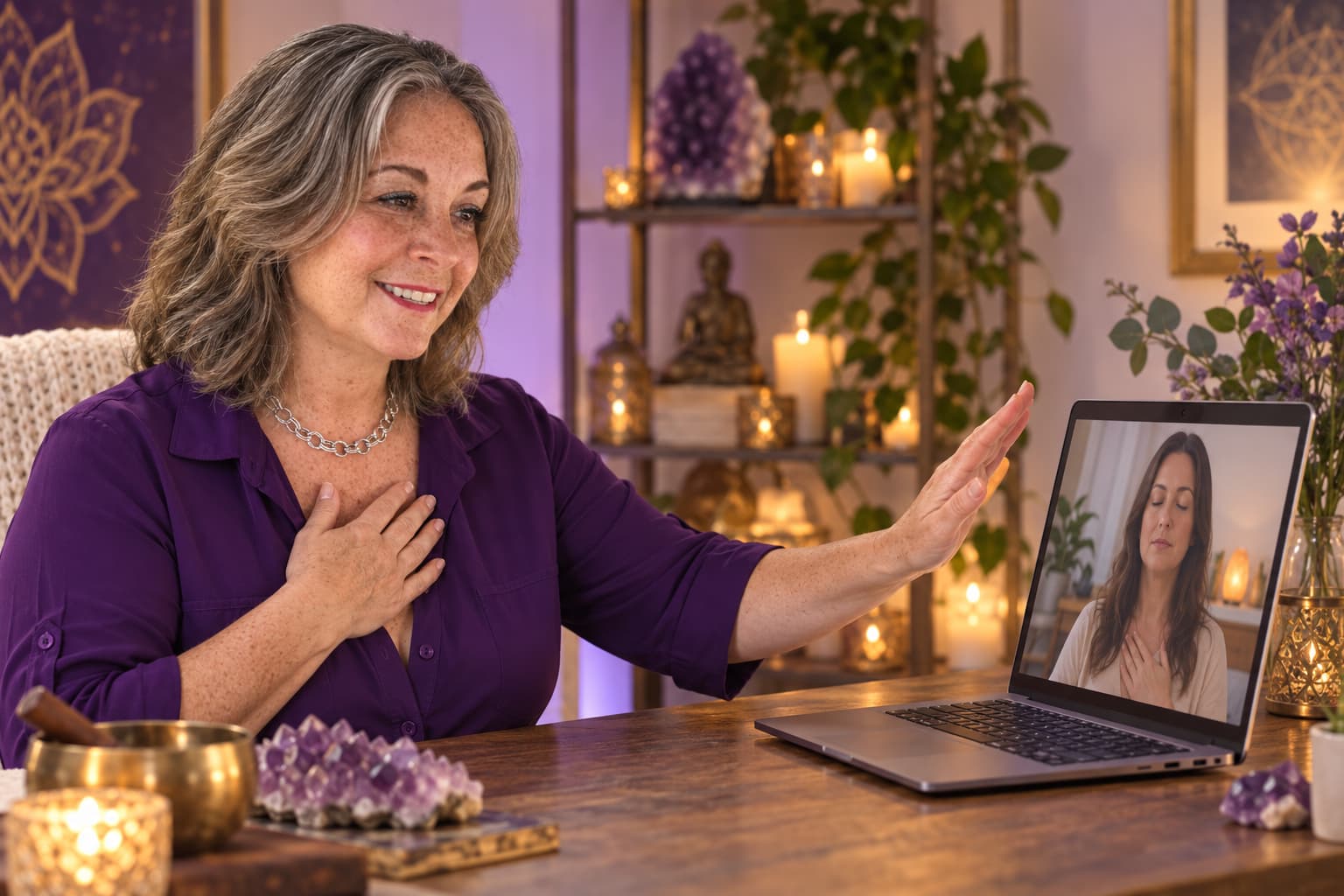
Chakra Cleansing
Explore a spiritual energy practice centered on the chakras, with time for personal reflection and a focus on your sense of balance and well-being.
Explore Chakra CleansingSessions are offered for personal insight and spiritual reflection. Experiences vary, and specific messages or outcomes cannot be promised. These services do not replace medical, mental health, legal, or financial advice.